
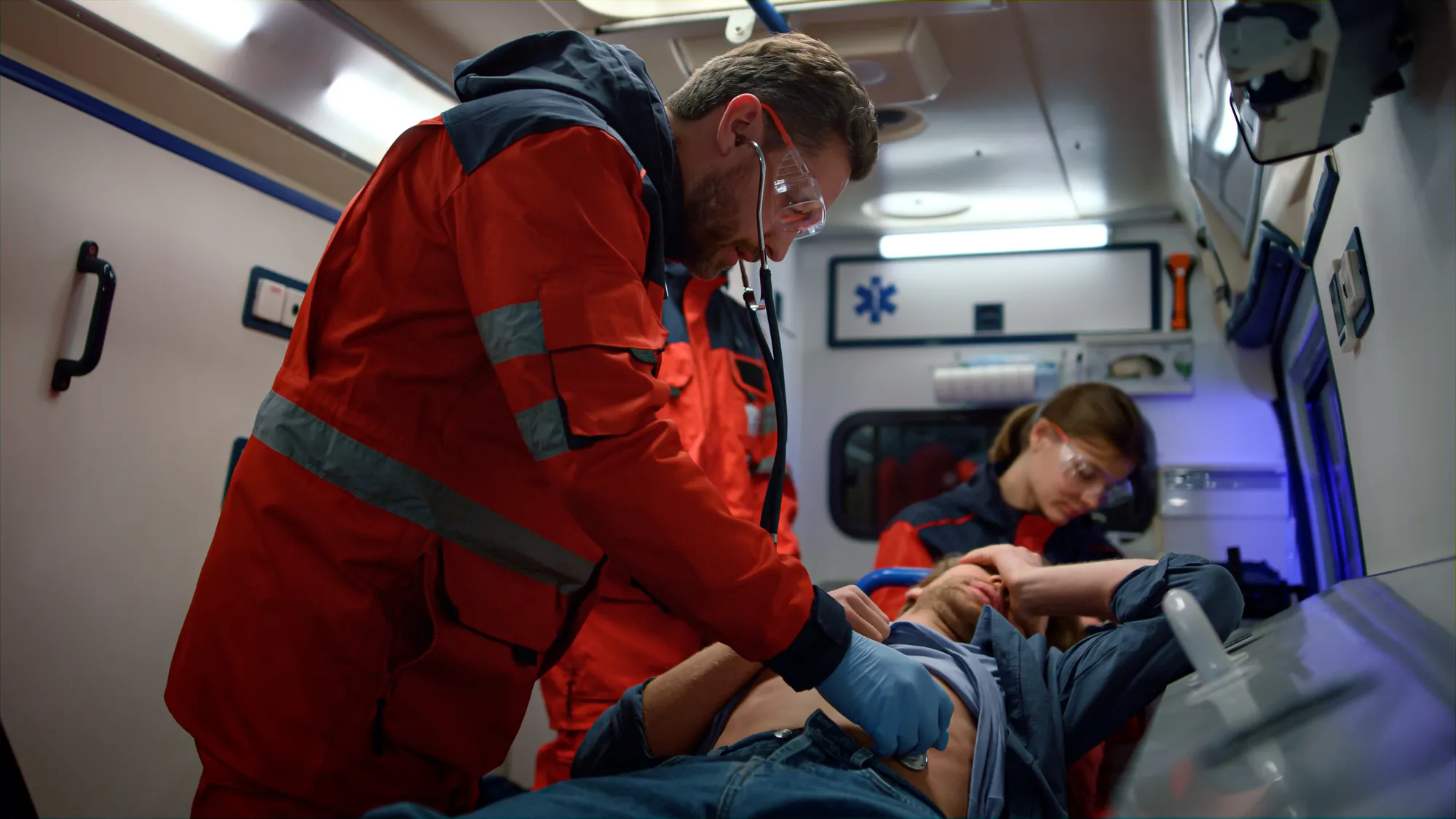
EMS drone delivery, when minutes decide the outcome
Medical logistics, built for the clock
A transfer that takes an ambulance an hour can take a drone minutes. The Aureum AC-16 droneport carries temperature-controlled storage, redundant monitoring, and backup power, and is built to stand up the same day.
Why it matters
3.4 to 23.9 mi
A government analysis found that when a rural hospital closes, the median distance to the nearest hospital with inpatient care rises from 3.4 miles to 23.9 miles. U.S. Government Accountability Office
139 to 41 min
Drone blood delivery in rural Rwanda cut median delivery time from an estimated 139 minutes by road to 41 minutes, and reduced blood-product expirations by 67% at the facilities served. Lancet Global Health
Where it goes to work
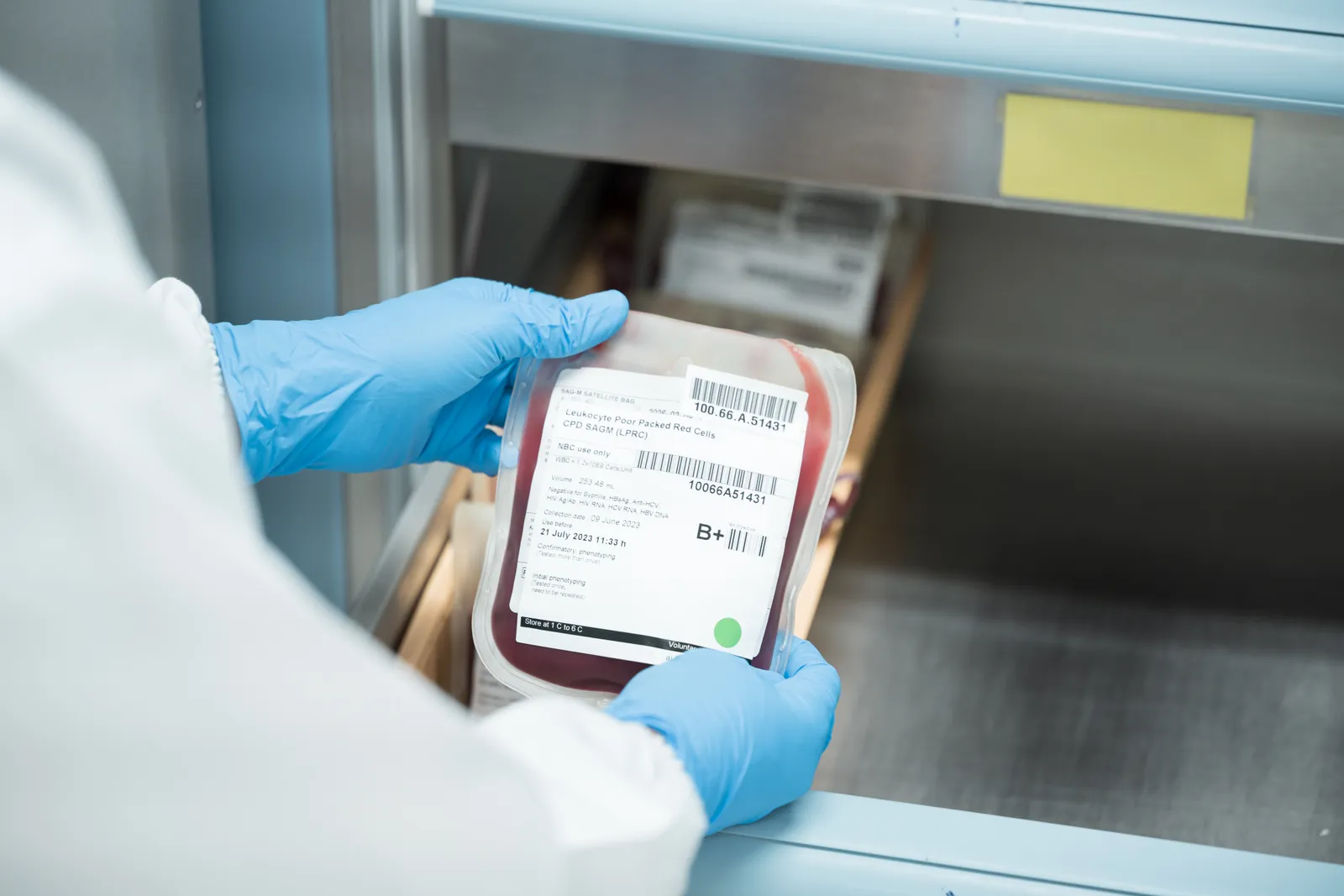
Blood, vaccines, biologics
Temperature-controlled storage with redundant monitoring and backup power, sized for time-critical medical payloads.
Reach where roads are slow
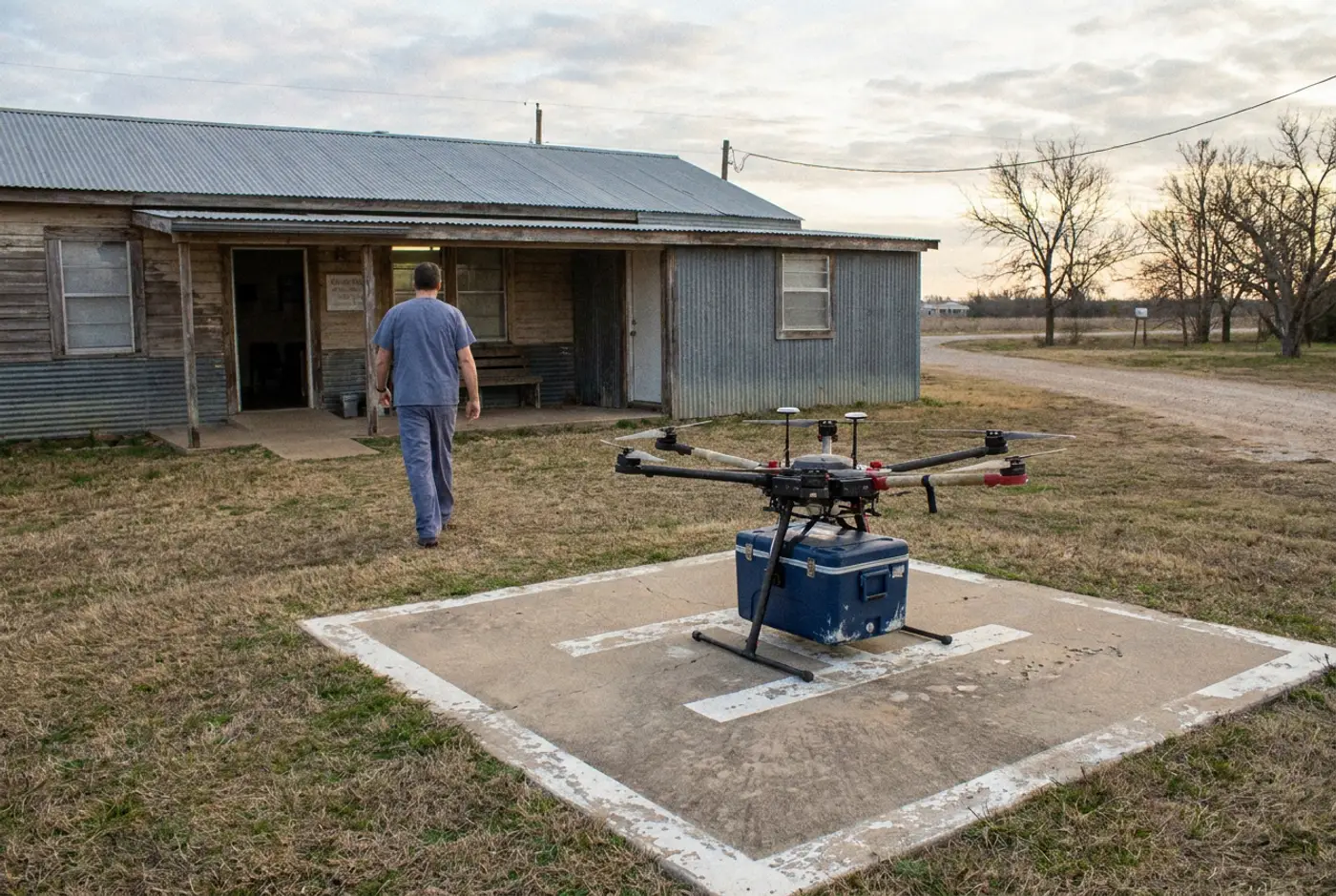
Open a medical air route where ground response stretches well past the clinical window.
FAQ
What medical payloads can Aureum infrastructure support?
The Aureum AC-16 droneport carries temperature-controlled storage with redundant monitoring and backup power, sized for blood, vaccines, biologics, and time-critical medical payloads. Air payload capacity depends on the drone platform deployed.
Can Aureum infrastructure serve a hospital or EMS agency with no existing airport?
Yes. The Aureum AC-16 droneport is designed to arrive and stand up the same day, with no airport or vertiport required, so a hospital or EMS agency can run a medical air route where fixed infrastructure never reached.
What does research show about drone delivery for medical logistics?
A Lancet Global Health study found drone blood delivery in rural Rwanda cut median delivery time from an estimated 139 minutes by road to 41 minutes, and reduced blood-product expirations by 67% at the facilities served.